
Winter in Buffalo brings more than snow and ice. As temperatures fluctuate and freeze-thaw cycles begin, potholes start forming across Western New York roads, threatening your vehicle’s wheel alignment before you even realize the damage is happening. At Total Automotive in Buffalo, NY, we’re already seeing the early signs: small road imperfections that will become alignment-destroying craters by March. Getting your alignment checked now, before the damage accumulates, protects your tires, your safety, and your wallet from Buffalo’s inevitable pothole season.
Potholes don’t appear overnight. They develop gradually as water seeps into pavement cracks, freezes, expands, and breaks apart the road surface. Every pothole you hit, no matter how small, can shift your suspension geometry slightly out of specification. Over weeks and months, these small impacts add up to serious misalignment that destroys tires and compromises vehicle handling. This blog explains why proactive alignment protection matters during Buffalo’s pothole season, how to recognize early warning signs, and why our advanced Autel extended rack alignment system delivers the precision measurements that keep your vehicle safe on deteriorating Western New York roads.
Why Buffalo's Winter Creates Perfect Conditions for Pothole Formation
Buffalo’s climate creates a relentless cycle of pavement destruction that begins long before spring arrives. Understanding how potholes form helps you recognize why preventive alignment service matters now, not after the damage is done.
The Freeze-Thaw Cycle Explained
Water is the enemy of pavement integrity. When temperatures hover around freezing, water seeps into tiny cracks in the road surface during the day, then freezes at night. Ice expands with significant force, widening cracks and breaking apart the pavement structure. As traffic drives over these weakened areas, chunks of asphalt break free, creating potholes that grow larger with every passing vehicle.
This cycle accelerates throughout winter. January and February see constant temperature fluctuations that create optimal conditions for pothole development. By the time you notice a pothole is large enough to avoid, you’ve already hit dozens of smaller road imperfections that have compromised your alignment.
Early Winter Road Damage Adds Up Fast
You don’t need to slam into a crater to damage your alignment. Small impacts from rough pavement, minor potholes, and uneven road surfaces create cumulative damage that gradually pushes your wheel angles out of specification. Your suspension system absorbs these impacts thousands of times throughout winter, and the precise angles that keep your vehicle tracking straight slowly shift beyond acceptable tolerances.
The drivers who protect their vehicles get alignment inspections before pothole season peaks. Waiting until spring means you’ve already put hundreds of miles on misaligned wheels, destroying tire tread and creating safety risks that could have been prevented.
How Misalignment Develops and Why It Matters Now
Your vehicle’s alignment isn’t a fixed setting. It changes gradually as suspension components absorb impacts, bushings compress, and mounting points shift under stress. Understanding this process explains why preventive alignment checks matter during early pothole season.
Your Suspension System Under Winter Stress
Your suspension system includes control arms, tie rods, struts, springs, and dozens of mounting points, all calibrated to maintain specific wheel angles. These components face extraordinary stress during Buffalo winters. Cold temperatures make rubber bushings less flexible, road salt accelerates corrosion of adjustment points, and constant impacts from rough pavement gradually shift everything out of position.
Even if you haven’t hit any dramatic potholes, your alignment has likely changed since your last service. The question isn’t whether winter driving has affected your alignment; it’s how much damage has already occurred and whether you’ll address it proactively or wait until your tires are destroyed.
Warning Signs Your Alignment Needs Attention
Your vehicle communicates alignment problems through subtle and obvious symptoms. Early detection prevents minor issues from becoming expensive failures:
- Steering wheel sits slightly off-center when driving straight: This is often the first sign of alignment shift. Even a small deviation indicates your wheels aren’t pointing in the same direction.
- Vehicle drifts or pulls gently to one side: On a flat, straight road with no wind, your vehicle should track straight with minimal steering input. Any pull suggests misalignment.
- Uneven tire wear developing on edges: Check your front tires for wear on the inside or outside edges. Early-stage uneven wear can be stopped with alignment service before the tire is destroyed.
- Steering feels less responsive than usual: If your vehicle doesn’t respond immediately to steering inputs or feels vague when changing lanes, alignment could be contributing to the problem.
- Unusual tire noise during normal driving: Misaligned tires scrub against the pavement, creating noise that increases as the problem worsens.
Ready to protect your vehicle before pothole season peaks? Visit Total Automotive at 2183 Sheridan Dr, Buffalo, NY 14223, or call us at 716-834-2296 to schedule your preventive alignment inspection today.
The True Cost of Delayed Alignment Service
Waiting until spring to address alignment issues costs more than scheduling preventive service now. The math is simple: misalignment destroys tires fast, and tire replacement costs far exceed alignment service.
Accelerated Tire Wear Destroys Your Investment
Quality tires cost $150 to $300 each, and a full set represents a significant investment. Misalignment can reduce tire life by 50% or more, destroying a $200 tire in 15,000 miles instead of the expected 40,000. When your wheels aren’t pointing in the same direction, your tires scrub against the pavement with every rotation, grinding away tread at an alarming rate.
Preventive alignment service costs a fraction of one tire replacement. Getting your alignment checked now, before winter damage accumulates, protects your tire investment and ensures you get full value from your rubber.
Reduced Fuel Economy Costs You Every Mile
Misaligned wheels create rolling resistance that forces your engine to work harder. This parasitic drag reduces fuel economy by creating unnecessary friction as your tires fight each other instead of rolling smoothly in the same direction. Over thousands of winter miles, this inefficiency adds up to significant fuel costs that exceed the price of alignment service.
Proper alignment ensures your vehicle rolls efficiently, maximizing the miles you get from every gallon. With gas prices constantly fluctuating, alignment service pays for itself through fuel savings over time.
Safety Compromises You Can't Afford
When your alignment is off, your vehicle doesn’t respond predictably to steering inputs. This becomes dangerous in winter conditions when you need precise control to navigate ice, avoid obstacles, or execute emergency maneuvers. Misaligned vehicles pull unpredictably, require constant steering correction, and don’t maintain stability during hard braking.
Your family’s safety is worth more than delaying alignment service. Getting your wheels properly aligned before conditions worsen ensures your vehicle responds exactly as expected when you need it most.
Understanding Preventive Alignment vs. Reactive Repairs
Two approaches exist for dealing with pothole season alignment damage: proactive inspection before problems develop, or reactive repairs after your tires are destroyed and handling is compromised. The choice affects your costs, safety, and stress level throughout winter.
The Preventive Approach Saves Money and Stress
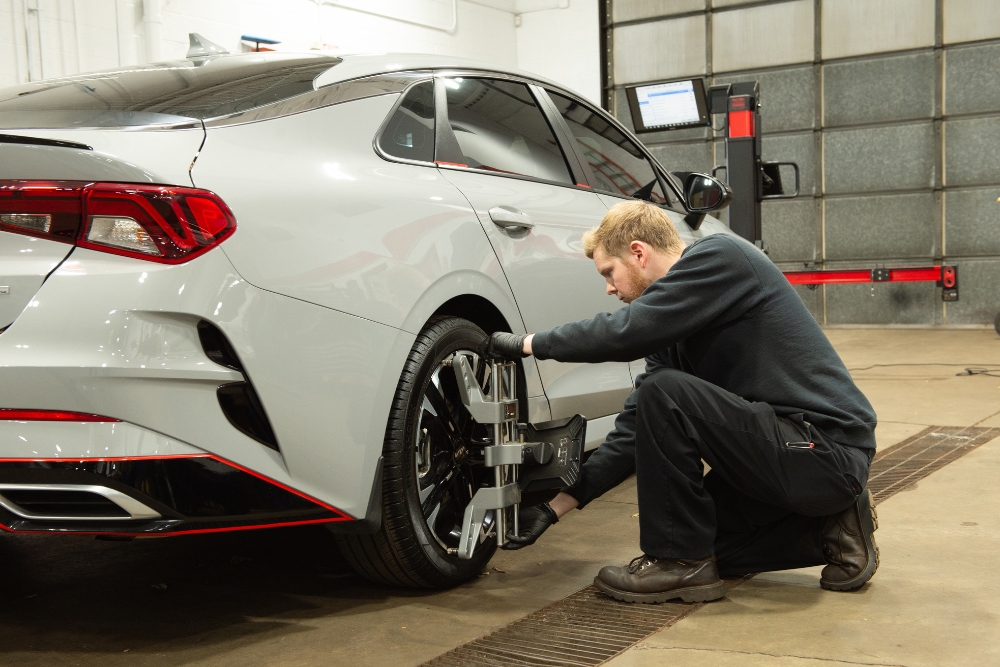
Preventive alignment inspection identifies small deviations from factory specifications before they cause visible tire wear or handling problems. Our Autel extended rack alignment system measures all four wheels simultaneously, comparing each angle to manufacturer specifications and showing exactly where your vehicle sits. If alignment is within acceptable tolerances, you have peace of mind and documented proof. If an adjustment is needed, we correct it before damage occurs.
This approach eliminates the surprise factor. You’re not discovering alignment problems when your tire wears through to the cords or your vehicle pulls dangerously in emergency situations. You’re addressing issues on your schedule, before they become urgent and expensive.
The Reactive Approach Guarantees Higher Costs
Waiting for obvious symptoms means the damage is already done. Your tires have been scrubbing against the pavement for thousands of miles, wearing unevenly and reducing their remaining lifespan. Your fuel economy has suffered from increased rolling resistance. Your safety has been compromised by unpredictable handling characteristics.
Reactive alignment service still fixes your wheel angles, but it can’t restore the tire tread you’ve already destroyed or refund the extra fuel you’ve burned. The total cost of reactive service (alignment plus premature tire replacement) far exceeds the investment in preventive inspection.
Why Total Automotive's Advanced Alignment Technology Delivers Superior Results
Not all alignment services provide the same level of precision or capability. At Total Automotive, our Autel extended rack alignment system and comprehensive approach ensure your vehicle meets exact factory specifications, not approximate settings that leave problems unresolved.
- Extended Rack Capability for All Vehicle Types: Our Autel extended rack alignment system accommodates vehicles many shops can’t service, including small RVs and larger trucks that exceed standard rack capacity
- Four-Wheel Precision Measurement: Our system measures all four wheels simultaneously, showing exact measurements for camber, caster, and toe compared directly to your vehicle manufacturer’s specifications.
- Manufacturer-Specific Specifications: Our system contains specifications for thousands of vehicles, ensuring we align your car, truck, or SUV to the exact angles the engineers specified for optimal performance.
- Before and After Documentation: We provide printouts showing your alignment angles before and after service, confirming your vehicle now meets factory specifications.
- Comprehensive Suspension Inspection: Before we align your vehicle, we inspect control arms, tie rods, ball joints, struts, shocks, springs, and steering components to ensure repairs will last.
When Alignment Isn't Enough: Recognizing Suspension Damage
Sometimes, winter road conditions damage more than just alignment angles. Potholes can bend components, break springs, and destroy suspension parts that must be repaired before alignment service will be effective. Our diagnostic approach identifies these issues immediately.
Common Winter Suspension Damage
- Control Arms and Bushings: Hard impacts can bend control arms or tear rubber bushings that cushion suspension movement. Damaged bushings allow excessive play that prevents alignment angles from holding.
- Tie Rod Ends: Steering linkage takes tremendous abuse from potholes. Worn or damaged tie rod ends create looseness in your steering and make proper alignment impossible.
- Struts and Shocks: Leaking or failed struts affect ride quality and tire contact with the road. Alignment can’t compensate for worn dampers that allow excessive suspension movement.
- Springs: Broken or sagging springs change your vehicle’s ride height and alter suspension geometry. Alignment must account for proper ride height to be effective.
How Often Should Buffalo Drivers Get Alignment Checked?
Buffalo’s harsh driving conditions demand more frequent alignment attention than your owner’s manual recommends. Understanding when to schedule inspection service protects your tires and prevents small problems from becoming expensive failures.
Before Pothole Season Peaks
Schedule alignment inspection in January or February, before pothole season reaches its worst. This preventive approach catches early alignment drift before it destroys tires and allows you to address issues on your schedule rather than as an emergency.
After Any Significant Impact
If you hit a pothole hard enough to jar your teeth or make you worry about damage, schedule an alignment inspection immediately. The same applies to curb strikes, accidents, or any incident where your suspension takes a significant hit. Waiting allows misalignment to destroy your tires and worsen suspension damage.
When Installing New Tires
Always align your vehicle when installing new tires. Putting fresh rubber on a misaligned vehicle guarantees uneven wear that will destroy your tire investment in a fraction of its expected lifespan. Alignment should be part of your tire replacement service, not an optional add-on.
Every 10,000 to 12,000 Miles
As preventive maintenance, schedule alignment inspection every 10,000 to 12,000 miles. This frequency catches gradual drift from normal driving and ensures small deviations are corrected before they cause problems.
FAQs About Buffalo Winter Wheel Alignment
How do I know if my car needs an alignment right now?
Your car needs an alignment if the steering wheel sits off-center, the vehicle pulls to one side, or you notice any uneven tire wear developing. Schedule an inspection before pothole season peaks rather than waiting for obvious symptoms.
Can winter weather affect my alignment even without hitting potholes?
Yes, winter weather affects alignment through temperature changes that alter suspension component flexibility, road salt corrosion of adjustment points, and cumulative stress from rough pavement. Even without dramatic pothole impacts, your alignment can drift out of specification over winter months.
What's the difference between wheel alignment and wheel balancing?
Wheel alignment adjusts the angles of your wheels relative to each other and the road, while wheel balancing corrects weight distribution to eliminate vibration. Alignment fixes pulling and tire wear problems; balancing eliminates steering wheel vibration at highway speeds.
How long does a wheel alignment take?
A professional wheel alignment typically takes 45 to 60 minutes, including initial inspection, measurement, adjustment, and final verification. If suspension repairs are necessary before alignment, the service time extends depending on the repairs required.
Will the alignment service fix my steering wheel vibration?
Alignment service won’t fix steering wheel vibration, which typically indicates a wheel balancing issue or a bent wheel. However, if your vehicle also pulls or shows uneven tire wear along with vibration, you likely need both alignment and balancing services.
Schedule Your Preventive Wheel Alignment Inspection in Buffalo Today!
Don’t wait for pothole season to destroy your tires and compromise your safety. Total Automotive’s Autel extended rack alignment system and experienced technicians deliver precision results backed by our 24-month/24,000-mile TechNet warranty.
Getting your alignment checked now, before damage accumulates, protects your tire investment and ensures your vehicle handles safely throughout Buffalo’s brutal winter. Our comprehensive suspension inspection identifies any issues that would prevent proper alignment, and our advanced equipment delivers manufacturer-specific adjustments that restore optimal performance.
Visit us at Total Automotive, 2183 Sheridan Dr, Buffalo, NY 14223, or call 716-834-2296 to schedule your preventive wheel alignment inspection. We serve drivers throughout Buffalo, Tonawanda, Kenmore, and Amherst with quality repairs fixed right the first time.